One client journey, two connected perspectives
Most skincare experiences split the consultation, product recommendation, professional judgment, and shopping handoff into separate moments. The context gathered at the beginning gets thinner at every step.
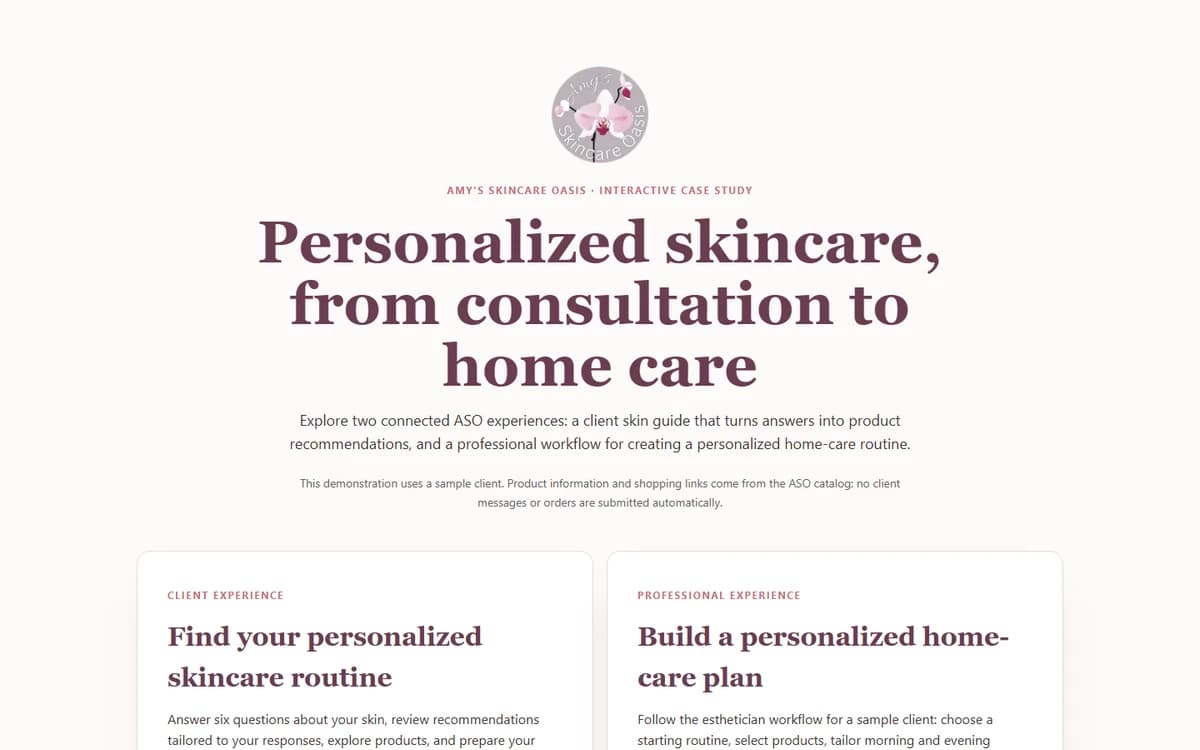
This case study makes the connection visible. A client can answer six focused questions and immediately see a routine shaped by those responses. An esthetician can then work from a structured starting point, choose products, adjust the order and frequency, write personalized guidance, and preview exactly what the client receives — including a one-click cart load tied to live inventory.
Client experience
The skin guide is intentionally short enough to finish. Six answers build a concern profile, AM and PM guidance, ingredient education, and a set of current products from the spa catalog.
Recommendations can connect to Shopify, Square, or other inventory depending on the platform, so picks stay grounded in what the facility actually sells. The engine is trained on ingested facility recommendation history when available, product catalog ingredients, and related spa data. That combination gives a shy shopper conservative, low-pressure guidance — and right in the quiz, they can ask questions or book a virtual consultation without leaving the flow.
Professional experience
The home-care builder shows the esthetician side of personalization. A sample client profile carries skin type, sensitivities, treatment history, concerns, and goals into the routine.
The esthetician can:
- start from an existing routine template,
- use an MCP tool so Claude or another agent can draft routines for sign-off,
- select or replace products against connected Shopify inventory,
- adjust morning and evening sequence and frequency,
- write client-specific instructions,
- preview the client-facing plan,
- and send a one-click cart the client can shop immediately.
Because the workflow connects to the client CRM or booking platform, finished plans can also ride replenishment schedules. Clients are less likely to run out of products, the esthetician gets more natural touch points, and the spa retains home-care sales that would otherwise drift to online retailers or box stores.
Why the two experiences belong together
The consultation is useful because it becomes action. The professional workflow is efficient because it starts with structured context and can lean on agent assistance without giving up sign-off. The client plan is more likely to be followed because it explains what to use, when to use it, where to buy it again, and when to replenish.
Together they demonstrate a reusable pattern for service businesses: collect the right context once, preserve professional judgment, keep inventory and CRM in the loop, and turn the result into a client experience that remains useful after the appointment.
Demonstration boundaries
The interactive experience uses a sample client. Product information and shopping links come from the ASO catalog. No client messages or orders are submitted automatically.